
When wildfires, floods, or extreme heat put a community on notice, the standard advice is simple: pack a bag, get to safety, follow the evacuation route. But for the millions of people with physical, developmental, intellectual, and psychiatric disabilities, “just leave” is rarely that simple. Accessible transportation may not show up. Shelters may lack ramps, sign language interpreters, or space for service animals. Medication and equipment that keep someone alive can be left behind in the scramble.
Climate disasters are becoming more frequent and more severe, and disabled people are disproportionately harmed by them, often because emergency systems weren’t built with their needs in mind. DLU compiled some practical tips to help you (or someone you love) prepare — from packing a go bag to registering for priority notifications to keeping your medical info on hand.
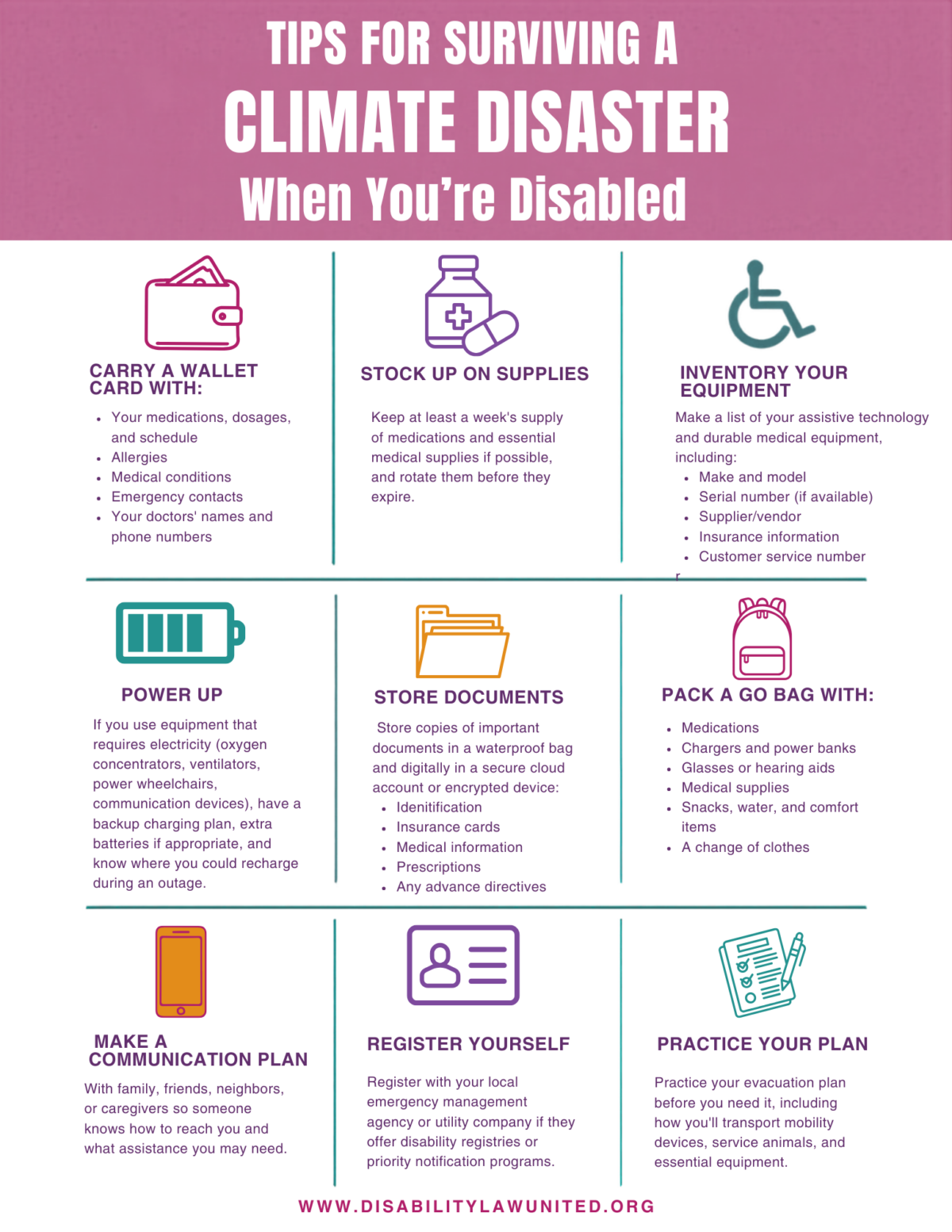
SURVIVAL TIPS DURING CLIMATE DISASTERS
CARRY A WALLET CARD WITH:
- Your medications, dosages, and schedule
- Allergies
- Medical conditions
- Emergency contacts
- Your doctors’ names and phone numbers
STOCK UP ON SUPPLIES
Keep at least a week’s supply of medications and essential medical supplies if possible, and rotate them before they expire.
INVENTORY YOUR EQUIPMENT
Make a list of your assistive technology and durable medical equipment, including:
- Make and model
- Serial number (if available)
- Supplier/vendor
- Insurance information
- Customer service number
POWER UP
If you use equipment that requires electricity (oxygen concentrators, ventilators, power wheelchairs, communication devices), have a backup charging plan, extra batteries if appropriate, and know where you could recharge during an outage.
STORE DOCUMENTS
Store copies of important documents in a waterproof bag and digitally in a secure cloud account or encrypted device:
- Identification
- Insurance cards
- Medical information
- Prescriptions
- Any advance directives
PACK A GO BAG WITH:
- Medications
- Chargers and power banks
- Glasses or hearing aids
- Medical supplies
- Snacks, water, and comfort items
- A change of clothes
MAKE A COMMUNICATION PLAN
With family, friends, neighbors, or caregivers so someone knows how to reach you and what assistance you may need.
REGISTER YOURSELF
Register with your local emergency management agency or utility company if they offer disability registries or priority notification programs.
PRACTICE YOUR PLAN
Practice your evacuation plan before you need it, including how you’ll transport mobility devices, service animals, and essential equipment.